TapClick a section to jump to it.
Resources · Guide
Own your marketing. Don’t rent it.
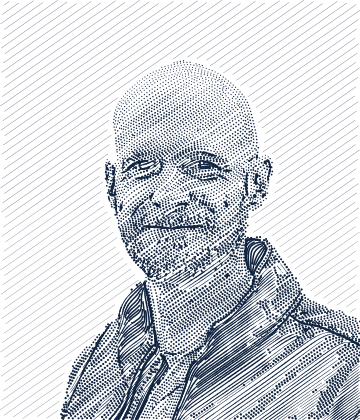
By Lucas LedbetterOn air
When a small company wants better marketing than its team can produce, the usual answer is to hire an agency. From then on, it pays for the same expertise every month for as long as the contract lasts, and when the contract ends, the expertise goes with it.
There’s another way to get work of that quality. You can build the expertise into your own company, into what your business knows, the way your team works, and its tools, so the marketers you already have can do agency-level work, and more of it. You pay to build it once, and it stays yours. Outside help still has a place, for the parts of a job that need a particular person’s hands or judgment.
01 · Agencies
Why do small companies hire agencies?
It’s because an agency gives them a bench of specialists they couldn’t hire one by one: a strategist, writers, designers, people who know email, social media and paid ads, and an account manager and project manager to keep it all moving. A small company gets skilled work when the stakes are high, extra hands when the calendar fills up, and an outside view of its own business. There’s no hiring risk, and if the fit is wrong, the contract can end. For a company with nobody in-house to own marketing, it’s a sensible place to start.
What a good agency isn’t, necessarily, is cheap. It’s easy to assume a team of specialists costs less than one salary, and sometimes it does. But the bill depends on how many hours you buy, how specialized their personnel are and how many of them work on your account, and it can come to far more than a salary. And it also carries the agency’s profit, because an agency is a business, too.
What each option costs is a question of its own; this article is about what you get to keep at the end of every marketing project.
02 · Renting
What does renting cost that the invoice doesn’t show?
The expertise itself. You keep the finished work, but the know-how that made it stays with the agency.
You pay for the same expertise again and again. The strategic thinking, the writing, the design sense: you’re renting them, and the meter runs for as long as you want the work. Nothing you’ve paid for builds up on your side.
You buy finished pieces, not the ability to make them. A good agency delivers good work, but what you receive is the work, not the capability behind it. The next time you need something, you brief, wait and pay again.
It can be slow. Between the agency’s capacity, the briefing and the rounds of review, getting something made can take weeks or even months. Planning that far ahead is exhausting, and sometimes you just need things now.
What the agency learns stays with the agency. Over months, its people learn who your buyers are, how you sound and what worked. That knowledge lives in their heads and their files. When someone on your account moves on, it can feel like starting all over: the next person learns your business from the beginning, on your time. When the contract ends, all of it goes.
Your data and files should be yours from the first day. The research, the customer and campaign data, the record of what worked and the original design files are the raw material for everything you make next. If an agency holds that raw material, you keep the deliverables but not the research and process behind them, though you paid for both. Changing agencies means starting over. Once your team works with AI tools, they matter even more, because they’re what those tools draw on. Nobody should have to chase an agency for the original design files after a project ends. They should be in your company’s hands from the start, so your team can make new designs from them. Before you sign, make sure the contract says the data and the source files are yours, not only the finished pieces.
So should the accounts. That’s been good practice since long before generative AI. Google’s own help pages say the client account still owns its data and that its users can always unlink an agency’s manager account, even one that has ownership. If nobody at your company is a user on the account, nobody there can do that.
Here’s a quick test: if your agency contract ended tomorrow, what would you still have?
03 · Owning
What does owning your marketing mean?
It means the expertise an agency would rent you lives in your company instead. What a strategist, a content strategist, a copywriter, a designer, an email or social media specialist and an analyst each know gets written into your own knowledge base: your positioning and audiences, your voice, a playbook for every channel, your brand’s design toolkits and the record of what every campaign did. It keeps the research you’ve done and the background behind your decisions, too. Then it’s built into the way your team works, so every brief and every draft starts from it. Our Agency expertise page walks through an agency’s bench, role by role.
It also means the files, the accounts and the data are in your company’s name, in tools you choose, and accessible from the start.
You pay to build it once. After that, what you pay for is the tools and your team’s time, not the same expertise again. And it keeps improving: every campaign adds to what the system knows, and the corrections your team makes become part of how it works the next time. That’s how a small team’s output can grow faster than its headcount.
You don’t have to do everything yourselves to own your marketing. You decide what stays in the company and what you hire out, and you make sure what stays keeps on building.
In-house marketing has been growing for years. In the Association of National Advertisers’ surveys, 42 percent of respondents had in-house advertising capabilities in 2008; by 2023, 82 percent had an in-house agency, and 92 percent still worked with outside agencies as well. As systems like this reach smaller companies, more people with agency experience are likely to follow the work in-house in order to run them.
04 · Busywork
Isn’t this just automating the busywork?
No. Automating repetitive tasks is part of it, and it’s easier than ever, even for people who don’t write code. But that was possible before generative AI, and it’s the smaller part.
The larger part is the specialist work. Once your company’s strategy, market, audiences and voice are written down where your AI tools can read them, your team can use those tools for more of the work that used to need a specialist: planning a campaign from the strategy, drafting in each author’s voice, adapting one piece for every channel and audience, and checking each draft against your standards before anyone reviews it. The decisions those tools make are grounded in your company’s institutional knowledge rather than in what’s typical. Without that context, people get the same generic results from the same tools.
That frees your people for the work that matters most: setting direction, making the final calls, finishing every piece and spending time with customers.
It also widens what each person can do. A generalist marketer can do specialist-quality work in several specialties, and a specialist can work well beyond their own area of expertise. Research points the same way. In a field experiment with more than 750 BCG consultants, run with researchers from Harvard Business School, MIT, Wharton and the University of Warwick, the people using a generative AI tool on a creative product task did 40 percent better than those working without it, and those who started out weakest gained the most, 43 percent. In a study of customer-support agents, agents working with an AI assistant resolved 14 percent more issues per hour on average, and 34 percent more among the newest and least skilled.
The same experiment found the limit, too. On a business problem the tool handled badly, the consultants who used it did 23 percent worse than those who didn’t. A system is only as good as what’s in it and the judgment of the people running it. It needs a good marketer at the controls, and a talented one can deepen it and get more out of it.
05 · Replacing
What happens when a company replaces its agency?
When I made the move from agency life to run marketing in-house, I became a team of one who was responsible for all marketing functions: strategy, branding, content, social, email, design, community management, market research, reporting, and more. I was tasked with a breadth and volume of campaigns that even my former agency’s team of specialized talent couldn’t have handled. This situation is all too common for small businesses.
And while I’m a generalist with some specialization in content strategy and long-form B2B content, I’ll be the first to tell you my graphic design chops are lacking.
We built the capabilities we needed by running generative AI tools over a simple knowledge base and connecting them to a few common third-party applications. The result was the quality of an entire agency team, at a scale most small businesses don’t have deep enough pockets for, with more personalized messaging than we’d ever managed. That meant consistently clear and on-target messaging, wide reach, and high impact.
All of that came after we replaced tens of thousands of dollars of outsourced work with a few hundred dollars of internal tools. Web and graphic design were all handled in-house after that, and the designs improved—not only beyond my own abilities, but beyond those of the specialists we’d contracted.
06 · Compared
Agency, freelancers, a hire or a system: how do they compare?
Each one has a place. The difference is what you pay for and what you keep.
| An agency | Freelancers | A new hire | A system your team runs | |
|---|---|---|---|---|
| What you pay for | Deliverables and hours, every month | Each piece or project | A person’s time | Building the capability, once; then tools and your team’s time |
| Who holds the expertise | The agency | Each freelancer | That person | Your company |
| Range of specialties | Wide: the agency’s bench | One per freelancer | One person’s skills | Many, through what the system holds |
| Who owns the files and accounts | Whatever the contract says | Whatever each agreement says | Your company | Your company, from the start |
| How much it can produce | What the retainer covers | What the budget covers | What one person’s week allows | More than the team could make by hand, and even more as the system learns |
| When it ends, or someone leaves | You start again | You start again | What they knew leaves with them | What they knew stays, built into processes for the next person |
| What it needs from you | Briefs, reviews and the monthly fee | Briefs, management and payment | Hiring, training and management | Someone to run it, and time to build each capability |
| Best for | A short burst, a high-stakes launch, or no one in-house | A specific piece or skill | A role you need full time | A team of one to three that wants versatility, depth, and to keep what it builds |
By a system, we mean your company’s expertise and standards written into a knowledge base your team runs with its AI tools and everyday apps, rather than another app to subscribe to. And a new hire has a version of the agency problem: when a marketer leaves, what they knew leaves too, unless it was written down.
07 · Right call
When is an agency or freelancer still the right call?
Sometimes, and it’s worth being plain about when.
- When your people won’t use the system. It only works if your team runs it. If nobody will, an agency may serve you better.
- When nobody makes time to build the capability. A system learns a kind of work because someone takes the time to set it up and tune it. If that time never comes for, say, email or video, rent that work until it does.
- When your team has no room for more. A system raises what each person can do, but even then your team will hit capacity limits. At that point, you’ll need to decide whether to add an internal team member who can leverage your system or rent external help.
Beyond those, the useful question is which processes, or which parts of a process, still need something the system doesn’t have, rather than which skills to rent. A skill is knowledge applied in a process. The system holds the knowledge and can apply it across many processes. What it can’t supply is a person’s hands or presence where those are the point, a creative call it hasn’t been taught to make, or knowledge that still lives only in someone’s head.
Take video. Your system can help plan a video and edit it, but some of the strategy, some of the creative decisions and the person holding the camera still need an expert. Rent those parts if needed, but keep the rest in-house. The same goes for a capability you haven’t built yet: you might want to hire help until you build it out.
08 · Start
Where do you start?
With your processes, not a list of busywork. Automating repetitive tasks is one part, but a system tapping your business knowledge can take on more strategic and creative work than ever before, so look at every process in your campaigns and ask:
- Where do we have a skill gap?
- What never gets done?
- Which processes would pay back the most if their quality or volume went up?
- Which are the most expensive, or too expensive to do at all?
- What’s easy to automate that we just haven’t gotten to?
- Which campaigns or processes are most urgent or important?
The processes that turn up in more than one answer are good places to begin.
While you’re at it, check the basics of ownership: an admin login for your company on every ad, analytics and social account; your domain and website in your company’s name; your email list; your source files; and your brand guide.
This is the work we do at Solo Signal Marketing. We build a system like this into your company as one project, up front, with no retainer, because renting expertise is one more ongoing expense, and a capability you own keeps paying back as your team builds on it.
Build agency-level expertise your team keeps. Book a conversation
09 · Questions
Questions owners ask
Will we still need an agency at all?
Many teams of one to three likely won’t, once their system is mature, except for the parts of a job that need a person’s hands or presence, like a video shoot. Others keep an agency for a specialty or two, and its hours can go further.
Can a team of one or two really do what an agency does?
Much of it, once the expertise is written into the system and the team has time to run it. And once you’ve built in the right capabilities, for many projects, it’s possible for you to do better and far more.
What should we make sure we own if we keep our agency?
Your strategy and brand documents, the source files for everything made for you, and an admin login on every account the agency works in, from ad platforms and analytics to your website and email list.
What happens if our marketer leaves?
The expertise stays, because it’s written into the system instead of kept in one person’s head, and the system helps the next person learn how your company works—and even to run effective campaigns before they’re fully up to speed.
Off air
The Solo Signal
Notes on marketing that gets heard, in your inbox.
Received. The welcome email is on its way.
Every piece is designed by people and finished by hand to the team’s own standard, and the specialist work in between is automated.
Read next
Essay · 11 min
Why I Built My Marketing OS on Airtable—and When to Leave It